
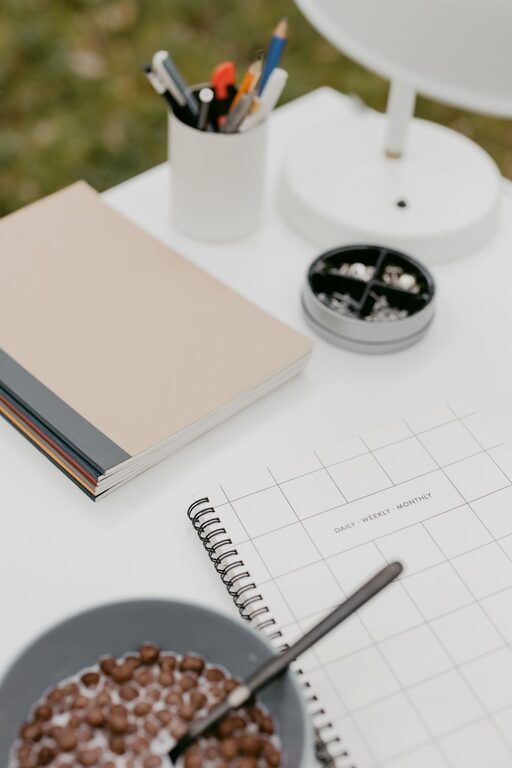
Choosing a notebook should be simple, but the number of sizes, paper types, layouts, and covers can make the decision surprisingly difficult. A notebook may look beautiful on a store shelf, yet remain untouched once you bring it home.
The best notebook is not always the most expensive or attractive one. It is the one that fits naturally into your daily routine. When a notebook matches how you think, write, and move through the day, you are much more likely to use it regularly.
Start With Its Main Purpose
Before comparing brands or designs, decide what you want the notebook to do. A notebook for quick work notes has different requirements from one used for drawing, journaling, or long-form writing.
Ask yourself:
– What will I write in it?
– Where will I use it?
– How often will I carry it?
– Do I need to refer to the pages later?
– Will I use a pen, pencil, marker, or several tools?
Common uses include:
– Daily planning
– Meeting or class notes
– Journaling
– Sketching
– Lists and reminders
– Creative writing
– Project planning
– Recording ideas
You can use one notebook for several purposes, but a clear primary use makes it easier to choose the right format. If you want to capture ideas while traveling, portability may matter most. If you plan to write for several minutes each evening, comfortable paper and enough page space may be more important.
Choose a Size That Fits Your Routine
Notebook size has a direct effect on whether you use it. A large notebook gives you room to write, but it may be inconvenient to carry. A small notebook is easy to keep nearby, but its pages may feel cramped.
Pocket notebooks
Pocket notebooks are useful for short notes, reminders, shopping lists, and ideas that need to be captured quickly. They can fit into a coat pocket or small bag, making them easy to keep with you.
Choose this size if you value convenience and tend to write in brief bursts. Avoid it if you often need full pages for detailed notes.
Medium notebooks
Medium notebooks offer a practical balance between writing space and portability. They work well for general note-taking, journaling, planning, and everyday use.
This is often the safest choice if you are unsure what size you need. It provides enough room for comfortable writing without becoming difficult to carry.
Large notebooks
Large notebooks are a good fit for desk-based work, detailed planning, drawing, and long entries. They are also useful when you want to keep one project in a single place.
The tradeoff is that they are less convenient for carrying around. If your notebook mostly stays at home or in an office, that may not be a problem.
Pick the Right Page Layout
The page layout affects how easy it is to organize your thoughts. Consider whether you prefer structure, flexibility, or a combination of both.
Lined pages
Lined pages are a dependable choice for writing, lists, notes, and journaling. The lines help keep text organized and make it easier to estimate how much space an entry will need.
Pay attention to line spacing. Narrow lines can fit more text, while wider spacing may feel more comfortable if you write large or like to add notes between lines.
Blank pages
Blank pages provide maximum flexibility. They are useful for sketches, diagrams, mind maps, lettering, and free-form writing.
They can feel less helpful if you prefer clear guidance. Without lines or other markers, it may be harder to keep writing straight or organize information consistently.
Grid or dotted pages
Grid and dotted pages offer structure without being as restrictive as lined paper. They work well for planning, tables, charts, diagrams, and organized notes.
Dotted pages are especially popular for flexible layouts because the marks are visible enough to guide your writing but subtle enough to stay in the background.
Combination layouts
Some notebooks include different page styles or sections. These can be useful if you want to combine writing, planning, and sketching in one place.
However, make sure the variety serves a purpose. Too many sections may make the notebook feel complicated, especially if you prefer a simple writing routine.
Consider Paper Quality
Paper quality can determine whether you enjoy using a notebook. The most important factor is how the paper works with your favorite writing tool.
If you use a ballpoint pen or pencil, many types of paper will work well. If you use gel pens, markers, or fountain pens, look for paper that resists smudging and prevents ink from showing through to the other side.
Before buying, check for:
– Smooth or textured surfaces
– Ink showing through the page
– Smearing after writing
– Pages that feel too thin
– Paper that works with your preferred pen
If possible, test a sample page. A notebook with attractive paper may still be frustrating if your ink takes too long to dry or spreads across the page.
Think About Binding and Opening
A notebook should be comfortable to open and write in, especially if you plan to use both sides of the page.
Lay-flat binding is helpful for journaling, studying, and desk work because the notebook stays open without being held down. Spiral binding also allows pages to fold back, which can be convenient in small workspaces.
Hardcover notebooks offer protection and a firm writing surface. Softcover notebooks are often lighter and easier to carry. Sewn bindings can be durable, while glued bindings may be less expensive but may not hold up as well with heavy use.
Choose the style that matches where and how you write. If you often write while standing or sitting without a desk, a firm cover and flexible binding may be useful.
Avoid Buying More Notebook Than You Need
A notebook with too many features can create unnecessary pressure. Numbered pages, built-in indexes, calendars, pockets, ribbons, and elaborate prompts may be helpful, but only if you will use them.
A simple notebook is often the best starting point. You can add your own labels, page numbers, tabs, or symbols as your needs develop.
Also consider the number of pages. A thick notebook may last a long time, but it can feel heavy and difficult to carry. A thin notebook may be easier to finish, which can create a satisfying sense of progress.
Match the Notebook to Your Environment
Think about where the notebook will live.
For a desk, you may prefer a larger format with a firm cover. For a bag, choose something lightweight and durable. For a bedside table, a smaller notebook may be more convenient. If you plan to use it outdoors, look for a cover and paper that can handle regular handling.
The best notebook is often the one that is easy to reach. Keep it near the activity you want to connect with it. A planning notebook can stay beside your calendar, while an idea notebook may belong in your bag.
Make It Easy to Start
Even the right notebook can go unused if you expect every page to be perfect. Give yourself permission to make ordinary notes, change formats, skip pages, and use the notebook in a way that feels natural.
Try starting with:
– A short list of current priorities
– Three things you want to remember
– A page for random ideas
– A simple plan for tomorrow
– A few lines about your day
You do not need a complicated system. A notebook becomes useful through regular, low-pressure use.
A Simple Buying Checklist
Before choosing, confirm that the notebook:
– Fits its main purpose
– Is comfortable to carry or store
– Has a layout you will enjoy using
– Works with your favorite writing tool
– Opens easily enough for your routine
– Has enough pages without becoming cumbersome
– Feels appealing but not too precious to write in
If you are still uncertain, choose a moderately sized notebook with a simple layout and paper suited to your everyday pen. It is a flexible option that can reveal your habits before you invest in something more specialized.
The notebook you will actually use is the one that removes friction. Choose a format that feels comfortable, keep it within reach, and let it serve your ideas instead of asking you to follow a complicated system.